The demand map in the Israeli real estate market of 2026 presents a fascinating demographic and urban shift. For many years, Tel Aviv was the undisputed magnet for Millennials (Generation Y)—young entrepreneurs, tech professionals, and freelancers who viewed it as the exclusive epicenter for culture, employment, and a modern lifestyle. However, annual migration data now reveals a clear trend of financial sobering. Extreme cost of living, disproportionate housing price surges, and low value for money in the Tel Aviv metropolis have led to a distinct negative migration of this high-quality, young audience toward adjacent coastal cities.
Within this shifting map, central Netanya is emerging as the leading and most desirable alternative. Young professionals giving up on the cramped, parking-deprived basement units of central Tel Aviv are discovering that a short drive north offers a completely different caliber of living. High transport accessibility, momentum in architectural development, and immediate proximity to the city’s spectacular coastal cliffs create the precise blend of urban energy and personal well-being. In this comprehensive guide, the real estate experts at Anat Top Home present a data-driven comparison between both cities and explain why choosing properties for sale in Netanya represents the smartest economic and personal move for the younger generation.
The Anatomy of a Trend Shift: Reality-Based Real Estate Economics
To understand the deep motives driving Millennials toward a renewing Netanya, one must perform a cold economic cost-benefit analysis. A budget of 3,500,000 NIS, considered a substantial amount of capital by any metric, has become a sum of painful compromises in the 2026 Tel Aviv market. Within Tel Aviv’s borders, this budget only yields a dated 2-room unit, frequently in a building requiring deep renovation, lacking an elevator, lacking a standard residential secure space (MAMAD), and crucially, without private parking registered in the Land Registry (Tabu), located in a noisy area suffering from endless infrastructure works.
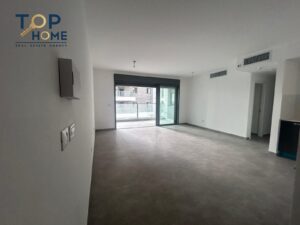
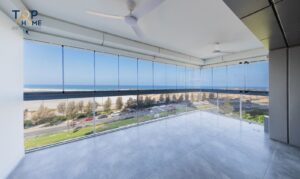
When evaluating the alternatives presented by a leading real estate agency in Netanya, a entirely different reality comes to light. For the exact same budget in renewing central Netanya, a young buyer can secure a brand-new, spacious 4-to-5 room property in a modern boutique urban renewal project. These assets feature rich technical specifications, a large sun balcony facing an open urban view, a standard MAMAD, a high-speed elevator, and private underground parking registered in the Tabu. This gap is not just quantitative but qualitative, directly boosting the buyer’s standard of living, peace of mind, and sense of personal and financial security.
The long-term financial implication of this decision is dramatic. While the Tel Aviv asset under this budget is near the absolute ceiling of its appreciation potential and yields an exceptionally low rental return, central Netanya is in the midst of an accelerated value optimization process. Massive municipal investments in upgrading public spaces, developing pedestrian brick walkways, establishing culture and leisure hubs, and renewing the coastline and promenades ensure that properties purchased here today will enjoy steady, significant value appreciation over the coming years—making the purchase a wise strategic investment for a family’s future.
Direct Parametric Comparison: Tel Aviv vs. Central Netanya (2026 Data)
| Parameter for Comparison |
Property in Tel Aviv (Budget: 3.5M NIS) |
Property in Renewing Central Netanya (Budget: 3.5M NIS) |
Impact on Quality of Life |
| Physical Specs & Size |
2 rooms, 50-60 sqm, old and weathered building |
4-5 rooms, 95-110 sqm, brand-new modern construction |
Spacious living areas, dedicated home office space, high functionality |
| Parking & Accessibility |
No parking (long street searches or expensive rentals) |
Private designated parking registered in the Tabu |
Saves hours every week, total peace of mind, maximum convenience |
| Outdoor Space |
No balcony, or a tiny, dated utility balcony |
Wide sun balcony (12-14 sqm) facing the sea breeze |
Hosting guests, home leisure, natural connection to the Mediterranean climate |
| Safety & Infrastructure |
No MAMAD, no elevator, aging internal plumbing systems |
Standard internal MAMAD, modern elevator, cutting-edge systems |
Absolute personal safety during emergencies, low ongoing maintenance costs |
| Beach Proximity |
Long walk or a crowded ride on public transit |
5-20 minutes direct walk to organized beaches and promenades |
Sports, health, and a lifestyle seamlessly blending nature with urbanity |
| Appreciation Potential |
Moderate and stagnant; market has reached saturated price levels |
Exceptionally high; neighborhoods are undergoing rapid urban renewal |
Significant growth in the family’s equity and long-term asset portfolio |
The New Lifestyle: Hybrid Work, Community, and Nature
Beyond dry financial calculations, the migration of Millennials to central Netanya is dictated by a profound shift in modern lifestyle concepts. The job market of 2026 is characterized by a widespread transition to hybrid or fully remote work models. High-tech workers and freelancers are no longer required to commute daily to offices in central Tel Aviv, neutralizing the necessity of living in the dense urban congestion of the Gush Dan region and enabling choices that prioritize personal welfare.
A 4-room property in Netanya allows for a whole room to be allocated as a styled, fully equipped home office, drawing a clear line between professional and family life. Instead of managing international video calls from the kitchen corner of a small Tel Aviv apartment, Millennials in Netanya enjoy a highly productive work environment that seamlessly blends necessary quiet with the coastal breeze and views.
Public spaces in central Netanya are similarly tailored to the needs of a young, dynamic population. The interactive Independence Square, pedestrian avenues like Herzl and Stampfer streets, and local boutique cafes generate a bustling social environment reminiscent of familiar urban cultures, but without the suffocating congestion. Additionally, immediate accessibility to the cliffside promenades and beaches allows for the natural integration of sports—running, cycling, or surfing—into the daily routine, directly enhancing residents’ physical and mental health.
Guide: Moving Smart from Tel Aviv to Netanya (How-To)
For those considering this strategic relocation, we have defined a professional step-by-step protocol to guarantee a successful transition:
-
Map Transit and Accessibility Requirements: If you need to travel to central Israel a few times a week, focus on assets offering fast access to Netanya’s train stations (Central or Sapir) or main arteries linked to rapid public transit lanes (BRT lines and the future Metro).
-
Analyze Urban Renewal Zones: The city center is experiencing immense building momentum. Evaluate projects in their final stages or newly completed buildings that have already received Form 4 (Tofes 4) to ensure a swift move into a modern property without planning delays.
-
Verify Parking and Storage Specifications: Do not compromise on parking. Ensure the offered space is a standard or underground spot legally registered in the Tabu—not a mechanical car doubler or a spot based on open availability—as private parking is a primary driver of property value retention.
-
Tour the Neighborhood Avenues at Varying Hours: Visit target residential streets in the morning, afternoon, and evening. Evaluate noise levels, the demographic fabric, and proximity to essential amenities like supermarkets, public gardens, and leisure centers.
-
Leverage Real Estate Experts Familiar with Ground Trends: The local property market requires deep insight into municipal master plans. Professional guidance from an agency specializing in the area will prevent you from buying in a zone slated for disruptive infrastructure overhauls or in a building below modern standards.
The Added Value of Anat Top Home for the Next Generation
Relocating to a new city involves natural hesitations, especially for an audience accustomed to Tel Aviv standards. Anat Top Home acts as a strategic partner for Millennials executing the move to Netanya. We deeply understand the architectural, design, and transit expectations of a younger crowd; we don’t treat a property as merely concrete and walls, but as the foundational infrastructure for your new lifestyle.
Our expertise allows us to pinpoint the most precise opportunities in the market of properties for sale in Netanya. We maintain an exclusive inventory of assets within the renewing city center, in projects that offer modern interior design, high functionality, and maximum proximity to the sea, all while managing data-driven negotiations that secure your purchase at true, realistic market value.
Professional FAQ for Young Move-Uppers
1. How does the development of public transit in Netanya affect connectivity to Tel Aviv?
Netanya is undergoing a comprehensive transportation upgrade that includes expanding service at existing train stations, developing dedicated public transit lanes, and a future connection to the BRT and Metro lines. For Millennials working in Tel Aviv, living in central Netanya enables a fast, comfortable commute to the employment hubs of Sarona, Azrieli, or Ramat HaChayal in about 25 to 35 minutes by train—completely bypassing traffic congestion and expensive parking hassles.
2. What is the current planning status of urban renewal projects in central Netanya?
The Netanya Municipality actively promotes comprehensive master plans for the renewal of the city center (the Net/620 plan and its addenda). This policy incentivizes developers to execute Pinui-Binui and TAMA 38/2 (demolition and reconstruction) projects while simultaneously upgrading municipal infrastructure, widening sidewalks, and adding green spaces. For buyers, this means an opportunity to purchase a completely brand-new property built to strict modern earthquake and safety standards within an established, central neighborhood with a defined character.
3. Does Netanya offer local employment solutions within the tech and tech-adjacent sectors?
Absolutely. Netanya no longer depends solely on the Tel Aviv job market. The city’s industrial and business parks—most notably the Poleg High-Tech & Business Park (Netanya Sapir) and the Kiryat Eliezer complex—currently house leading firms in technology, bio-med, and finance. The growth of these hubs creates thousands of high-quality local career positions, allowing residents to advance professionally without leaving the city.
4. What are the expected property taxes (Arnona) and maintenance fees for modern units in central Netanya?
The Netanya Municipality’s property tax rates are considered balanced and fair compared to the Gush Dan region. However, in modern properties featuring elevators, underground parking garages, and centralized building systems, one must factor in monthly building committee (Va’ad Bayit) or management fees. As part of our vetting process, we evaluate these ongoing costs and building management efficiency to ensure your monthly expenses align with your planned budget.
5. How does the Sale Law protect a buyer purchasing a property in an urban renewal project under construction?
Purchasing a property in a TAMA or Pinui-Binui project during construction phases is fully backed by the provisions of the Israeli Sale Law (Apartments). The developer is legally mandated to provide the buyer with a bank guarantee or an insurance policy against every payment made in accordance with construction milestones. Funds are deposited into a closed project account supervised by the funding bank, guaranteeing absolute safety for your capital against contractor insolvency.
6. What is the financial advantage of a 4-room property in central Netanya regarding future rental potential?
Should you decide to relocate or upgrade to a larger asset in the future, a 4-room property in central Netanya serves as an optimal income-generating asset. Demand for these layouts from young families, professional couples, and new immigrants is rigid and continuous. The stable rental pricing in the Netanya market guarantees a steady, significantly higher yield than what is common for small apartments in Tel Aviv, alongside preserving high liquidity for the asset on the open market.
Elevating Your Reality
The decision to leave Tel Aviv’s congestion for the open space, comfort, and value of a renewing central Netanya is more than a real estate move; it is a conscious strategic choice for quality of life, financial stability, and long-term planning. Combining your vision with the expertise, experience, and close guidance of Anat Top Home Real Estate Netanya ensures your relocation is smooth, professional, and secure—unveiling the exact property that maximizes your capital for ultimate comfort on the frontline of Israel’s riviera.