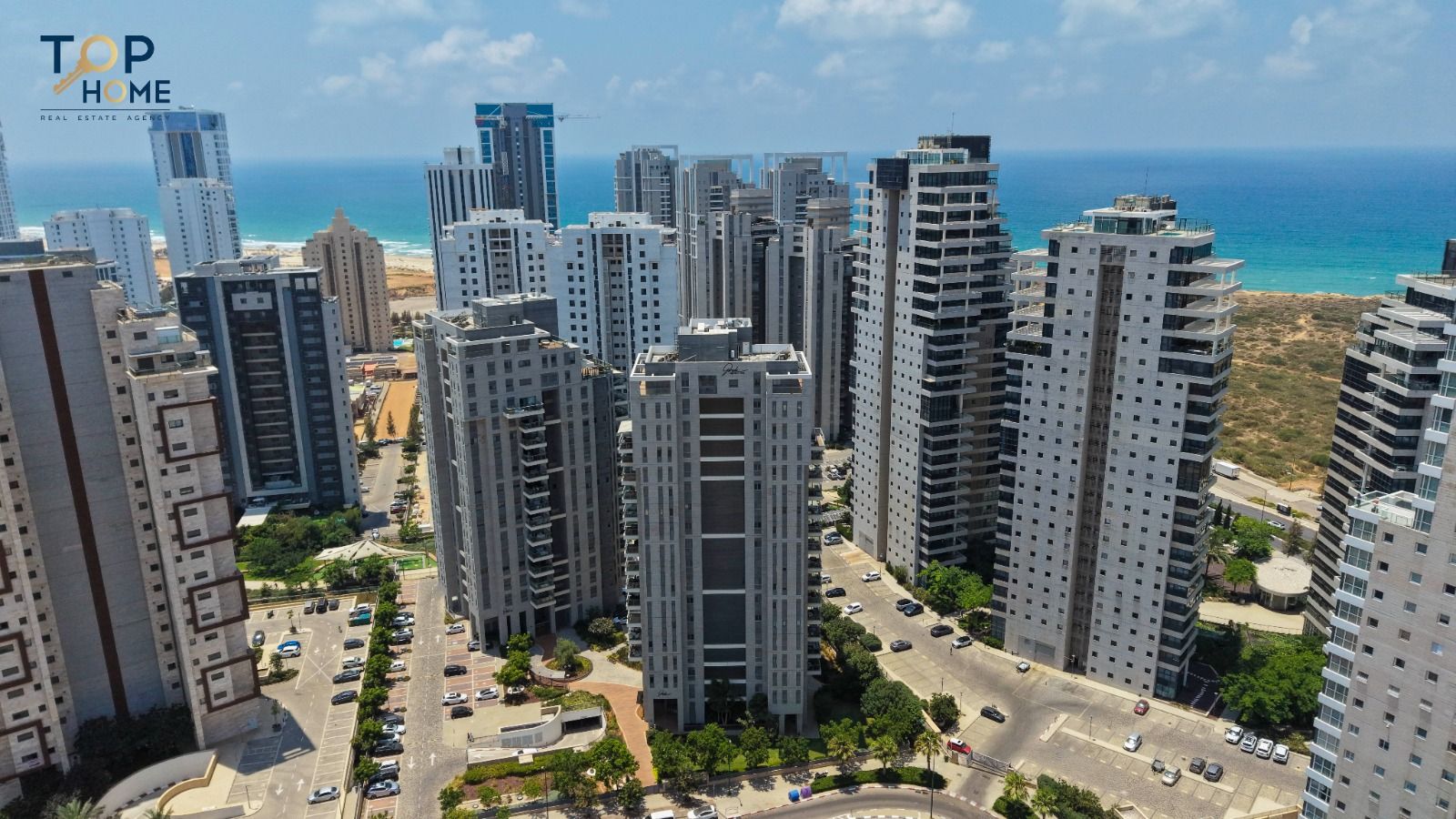
The skyline of Netanya has been undergoing an unprecedented architectural and engineering revolution in recent years. Innovative residential towers rising to heights of thirty stories and beyond are becoming the dominant feature of the local living experience, particularly along the beachfront strip and within flagship developing neighborhoods such as Shirat HaYam and Ir Yamim. The transition from low-rise contextual architecture to complex high-rise structures represents more than a visual shift; it generates an entirely new residential culture. A modern tower facing the ocean is functionally a dynamic, integrated engineering matrix encompassing advanced technological infrastructure, filtration systems, water pressure pumps, high-speed elevators, and expansive communal zones that demand rigorous, professional around-the-clock upkeep.
For experienced real estate buyers and business professionals evaluating modern projects in the city, understanding a building’s operational management mechanisms is just as critical as checking the Land Registry (Tabu) deed or the individual property specifications. The maintenance caliber of communal spaces directly impacts daily quality of life, the building’s structural resilience against the corrosive marine climate, and quite clearly, the long-term economic value and market liquidity of the assets on the open market. In this comprehensive guide, the real estate experts at Anat Top Home present a cold analytical breakdown of maintenance costs in coastal towers, define the evolving role of the modern building committee, and explain why choosing the correct management structure is the ultimate key to safeguarding your investment when purchasing properties in Netanya.
The Anatomy of Costs: What Does It Really Cost to Maintain a Coastal High-Rise?
Managing a maintenance budget in a prominent residential tower requires a long-term economic outlook and a deep understanding of current and future operational expenses. Unlike veteran buildings, where building committee (Va’ad Bayit) expenses were limited to lobby cleaning and basic lighting, modern towers integrate complex engineering setups legally mandated to undergo certified periodic testing and consistent preventative maintenance. Netanya’s geographic proximity to the water’s edge introduces a unique environmental challenge in the form of high humidity, salinity, and powerful winds, which accelerate material degradation and necessitate highly durable finishes along with stringent upkeep protocols.
Ongoing expenses in a coastal high-rise divide into several core categories:
-
Electro-Mechanical System Maintenance: High-speed elevators equipped with advanced command systems, water pressure pumps to elevate steady flow to the upper floors, automated smoke blowers, fire detection and suppression systems, and emergency backup generators legally mandated to pass weekly operational readiness tests.
-
Energy and Lighting Management: Illumination of expansive communal areas, continuous climate control for the luxurious entrance lobby and residential corridors, and the execution of automation and building management grids (smart building features).
-
Security, Sanitation, and Curation Services: Round-the-clock front-desk concierges or security guards, closed-circuit access control systems, underground parking garage detailing, and professional landscaping for the green spaces wrapping the structure.
These cumulative operational outlays translate into monthly management fees levied on each property based on its relative square footage. In new premium towers, these management fees typically range between eight and twelve NIS per square meter. Consequently, for a spacious property, the fixed monthly expense for high-rise maintenance alone can stand at a substantial sum of 1,200 to 1,800 NIS or more. This budget is fully administered by the external management firm under the building committee’s oversight, and it incorporates a regular allocation to a Sinking Fund designated to cover major capital repairs and full structural system overhauls five to ten years post-occupancy.
The Evolution of the Mechanism: The Redefined Role of Building Committees and Management Firms
The migration of residents into high-rise towers demanded a fundamental evolution in the legal and social management structure of co-owned properties. The old model—where a neighbor volunteered to manage accounts and collect monthly cash dues—is entirely unfeasible in complexes housing hundreds of residents and structural assets valued at millions of shekels. Amateur administration of a high-rise tower quickly leads to the failure of critical building systems, compromised personal safety, and a dramatic drop in property values.
In today’s landscape, the role of the modern building committee has shifted to resemble an overseeing corporate board of directors. The resident representation team is elected to mirror the interests of the property owners, establish overall building policies, and approve the annual budget. This committee does not execute the manual maintenance operations itself; instead, it hires an external, certified professional management and maintenance firm to serve as the building’s executive branch.
The management company holds responsibility for the daily steering of all service provider agreements, supervising certified technicians, executing computerized fee collection, and handling emergency troubleshooting. The combination of an aware, authoritative resident committee and a management firm with verified experience in coastal towers is the only true guarantee for preserving a building’s premium standard over the years. When sourcing brand-new properties directly from developers in Netanya, our office ensures that the sale contract includes clear clauses defining the identity of the initial management company, the binding length of their term, and the maximum permitted management fees, safeguarding buyers’ rights long before moving day.
Parametric Comparison: Traditional Building Committees vs. Professional Management Firms in High-Rises
| Operational Parameter |
Traditional Self-Management Model |
Professional Management Firm Model |
Direct Impact on Property Asset Value |
| Troubleshooting & Availability |
Limited; highly dependent on neighbors’ personal free time and willingness |
24/7 service hotlines; certified on-site maintenance crews |
Prevents compounding damage; delivers rapid, professional response times |
| Engineering System Auditing |
Reactive management (repairs are ordered only after a critical system fails) |
Regular preventative maintenance protocols; legally mandated testing |
Extends the functional lifespan of costly infrastructure; avoids disruptive shutdowns |
| Financial Collection Mechanics |
Manual tracking; accompanied by personal friction and high risk of non-payment |
Automated digital billing pipelines; structured legal enforcement frameworks |
Secures steady operational cash flows; maintains a protected, liquid sinking fund |
| Marine Climate Damage Control |
Lack of structural nuance awareness; delayed facade preservation efforts |
Expertise in salt-resistance metrics; continuous protective building seals |
Minimizes strategic failures in the core concrete skeleton and exterior aluminum |
| Open Market Asset Liquidity |
Low; visible deterioration in communal spaces deters high-end buyers |
Exceptionally high; the building retains a flawless, brand-new luxury aesthetic |
Secures maximum closing prices in second-hand market transactions |
Guide: Sizing Up a High-Rise Management Infrastructure Before You Buy (How-To)
When executing a real estate move and touring residential high-rises, we recommend activating a rigorous property management inspection protocol to ensure the long-term stability of your investment:
-
Demand the Building Bylaws and Management Agreement: Review the legal clauses defining the management firm’s responsibilities, their operational deliverables, the exact duration of their contract, and the structural update index for adjusting monthly fees.
-
Audit the Representative Committee’s Annual Financial Report: Verify that the building maintains a healthy, positive financial balance, ensure there are no severe outstanding debts from non-paying residents, and confirm the existence of a liquid, well-allocated sinking fund geared for large-scale future outlays.
-
Conduct a Thorough Tour of the Tower’s Technical Sectors: Do not stop at the designer entrance lobby. Descend into the underground parking levels, inspect the secondary carriage rooms, the main generator room, and the water pump stations. The level of cleanliness, order, and organization in these background spaces serves as the truest indicator of the maintenance firm’s operational standard.
-
Verify the Status of Periodic Elevator and Fire Safety Inspections: Ensure that the elevator control panels display a valid, up-to-date certificate of compliance signed by a certified elevator engineer, and confirm that the centralized fire suppression systems match current firefighting authority standards.
-
Leverage Real Estate Experts with Operational Insight: Partnering with an agency specializing in this specific market tier guarantees access to reliable historical data regarding the management firm’s professional reputation and the actual satisfaction rates of current residents within the structure.
The Strategic Value of Anat Top Home for Discerning Buyers
In the contemporary real estate arena, a broker’s professionalism is not calculated merely by their capacity to locate an attractive layout, but by their ability to analyze a property alongside its entire operational ecosystem. Anat Top Home Netanya Real Estate operates as your strategic boots-on-the-ground advisor in Netanya. We recognize that purchasing a property inside a luxury high-rise demands a meticulous audit of its maintenance frameworks, as these are the exact variables that dictate how your home will look and exactly how much it will be worth five or ten years down the road.
Our specialized expertise and deep-rooted track record in the local market give our clients a decisive edge. While filtering through inventories of properties in Netanya, we vet the operational backgrounds of the management firms active in each tower, dissect annual corporate budgets, and provide you with a transparent cost and risk map. Whether you are seeking brand-new properties directly from developers under early construction phases or sourcing a completely finalized turnkey asset, we guarantee a fortified negotiation approach that shields your economic interests and guides you to a secure, highly profitable, and financially stable transaction.
Professional FAQ for High-Rise Property Buyers
1. How is a management company’s status legally anchored within the Israeli Real Estate Law?
The Israeli Real Estate Law (Amendment No. 18) explicitly defines the legal status of a property maintainer (management company) within a co-owned building. The statute dictates that the resident committee is authorized to enter into a contract with an external firm to handle the management and maintenance of the common property, provided this decision receives approval from the general assembly of property owners by a simple majority vote. The executed management agreement outlines the firm’s legal boundaries, their specific basket of deliverables, and their legal liabilities to the committee and residents, serving as a binding framework integrated into the building’s official bylaws.
2. What is the structural difference between an owner’s and a tenant’s payment obligations regarding management fees?
According to Israeli real estate statutes and case law, the foundational obligation to fund the preservation of common property rests strictly on the asset owner registered in the Tabu. However, in virtually all modern lease agreements, a commercial clause shifts the day-to-day burden of standard building committee or management dues to the tenant as part of their ongoing living costs. Crucially, major exceptional capital outlays aimed at upgrading the physical building structure, replacing centralized baseline systems (such as purchasing a new generator), or executing full facade renovations are legally classified as capital asset enhancements that increase property value. Consequently, these costs fall exclusively on the property owner and cannot be pushed onto a tenant.
3. How does a tower’s high-speed elevator configuration impact an appraiser’s valuation for mortgage approval?
An elevator blueprint—encompassing the total number of shafts, their velocity metrics (measured in meters per second), and the core manufacturing brand—serves as a primary parameter when certified appraisers rank a building’s technical specifications. In prominent high-rises, wait times and vertical transit speeds directly dictate the quality of life and residential experience for properties on the upper tiers. An appraiser evaluating assets within new development projects or brand-new properties from a developer in Netanya assigns significant positive weight to buildings featuring a multi-shaft, rapid-transit elevator grid backed by premium service contracts with leading global manufacturers, as this structural profile ensures high market liquidity and safety, boosting the collateral value for the lending bank.
4. Is the resident committee legally authorized to replace a management company if service standards drop?
Yes, a resident committee’s right to replace an underperforming maintenance company is a protected proprietary and legal right, subject to the exit terms outlined in the original management contract. Executing a transition requires a resolution passed at a general assembly of the building’s property owners by the majority defined in the bylaws (typically a simple majority of owners present at the meeting). We highly recommend that management agreements include clear, pre-defined exit clauses from day one, permitting contract termination upon a thirty-to-sixty-day notice if explicit Service Level Agreements (SLAs) are missed, preventing protracted legal disputes and operational gaps that could harm the tower’s upkeep.
5. What is the role of a building-wide engineering home inspection report when taking over common property from a developer?
Upon the occupancy kickoff of a new residential tower, the temporary resident committee or their designated management firm is legally obligated to commission an independent engineering firm to execute a comprehensive building-wide home inspection report (Bedek Bayit) covering all common property, technical sectors, and centralized utility systems delivered by the developer. This report scientifically maps all construction defects, sealing failures, or deviations from statutory building codes and the mandatory technical spec sheet. It serves as the official legal foundation for demanding corrections from the developer under the warranty and checking periods defined by the Sale Law, ensuring that the tower’s residents are not forced to fund construction-rooted errors out of their own pockets, fiercely protecting the financial health of the building from its very inception.
Securing Your Skyline Investment
Modern residential culture within Netanya’s prominent high-rise towers establishes a new real estate equation, where the quality of structural management and engineering maintenance serves as the ultimate vector determining the future of your capital. Gaining a deep understanding of operational cost structures, maintaining an active and informed building committee, and partnering with verified, high-caliber management firms are the tools that guarantee your property retains its pristine aesthetic, secure quality of life, and peak market value over the years.
Fusing your real estate goals with the analytical precision, recognized experience, and highly localized guidance of Anat Top Home delivers complete transparency and peace of mind—ensuring that every move you make within the city’s dynamic property market translates into structured, secure, and thriving long-term success.